
VOL. 01, N. 0, MAY-JUNE 2026: CALL FOR ESSAYS
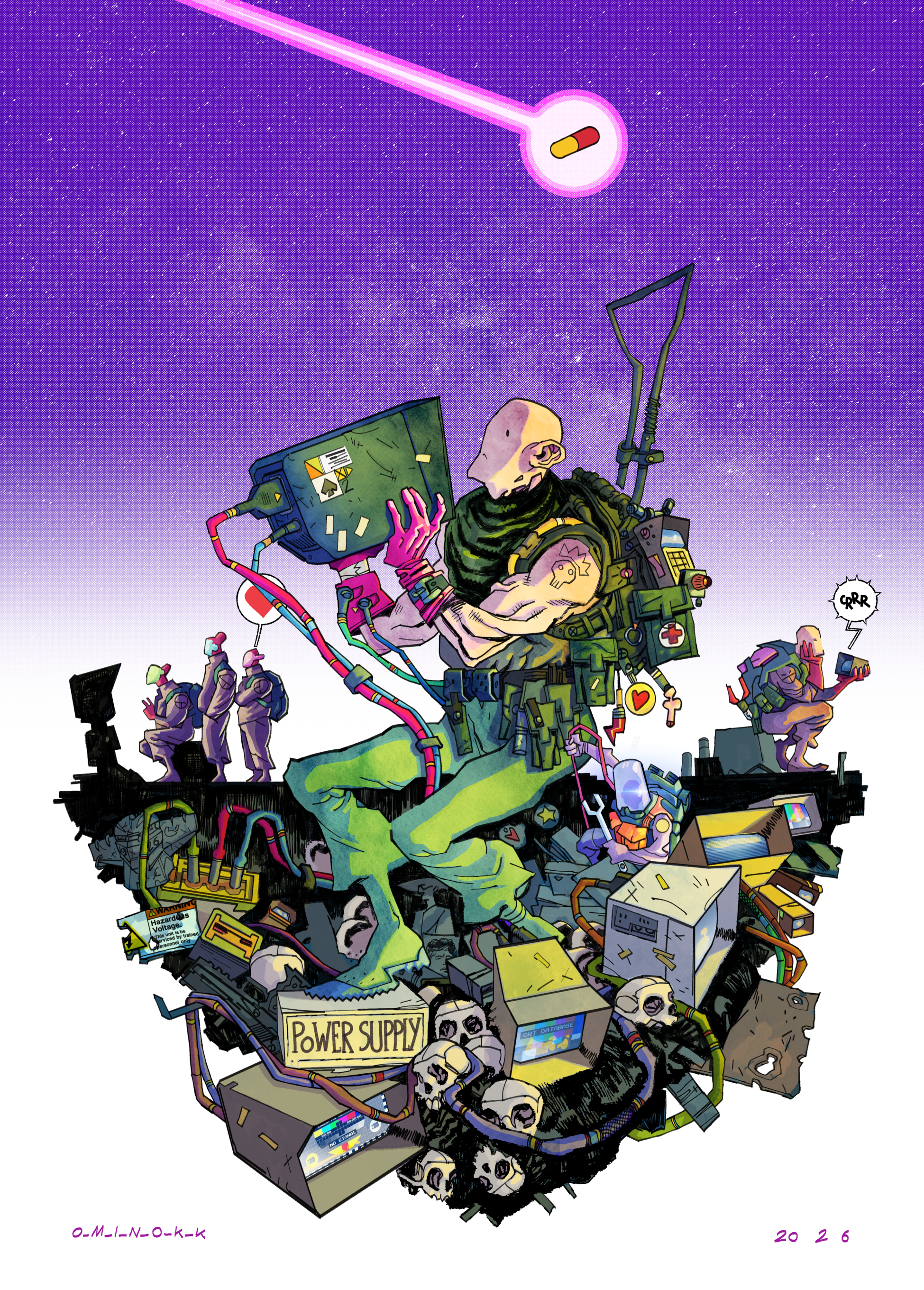
BLACKOUT
Cinema and other visions
Biannual journal of film, media and visual studies
BLACKOUT is an open-access digital academic journal dedicated to film studies, media studies, television studies, visual studies, and game studies. The journal was created as an interdisciplinary space for the critical analysis of contemporary images, audiovisual cultures, and media transformations. Published by the Naples Academy of Fine Arts through the OJS platform, BLACKOUT promotes a dialogue between cinema, media, visual arts, and contemporary digital practices.
VOL. 01, N. 0 – MAY-JUNE 2026
CALL FOR ESSAYS:
The New Frontiers of Cinema and Audiovisuals
Edited by Diego Del Pozzo
Cinema and audiovisual media are undergoing profound transformation in recent years, driven by technological evolution, media convergence, and shifts in production, distribution, and consumption practices for moving images. The emergence of digital platforms, complex seriality, and hybrid forms of cinema, television, video games, and the visual arts, as well as the impact of artificial intelligence and immersive technologies, have led to a radical redefinition of the traditional boundaries of the audiovisual medium.
In its 0th issue, BLACKOUT presents a thematic dossier in the Focus On section, The New Frontiers of Cinema and Audiovisuals, through which to critically interrogate these processes and explore the aesthetic, narrative, industrial, and cultural transformations shaping the contemporary audiovisual landscape. In this context, BLACKOUT invites scholars to reflect on new forms of the visible, on the shifts in languages, and on the emerging practices that are redefining the relationship between images, spectators, and media.
This call welcomes contributions that address the topic from theoretical, historical, analytical, and interdisciplinary perspectives, in line with the journal’s approach to cinema and film studies, media studies, television studies, and visual studies.
Areas of Interest (indicative and not exhaustive):
· Transformations of Cinematic Language in the Digital Age;
· Post-Media Cinema and Hybrid Audiovisual Forms;
· Television Series and Streaming Platforms;
· Relationships Between Cinema, Video Games, and Transmedia Narratives;
· Artificial Intelligence, Algorithms, and Audiovisual Production;
· Virtual Reality, Augmented Reality, and Immersive Cinema;
· New Aesthetics of Digital Images;
· Spectatorship, Experience, and Participatory Practices;
· Digital Archives, Found Footage, and Image Reuse;
· Expanded Cinema and Dialogues with the Visual Arts;
· Audiovisual Policies and Representations of the Contemporary.
Contribution Types
The journal welcomes (subject to editorial review):
· Original research essays;
· Theoretical and methodological contributions;
· Case study analyses;
· Interdisciplinary critical contributions.
All contributions will be subjected to double-blind peer review.
Guidelines and Submission
Contributions may be written in Italian or English.
Contributions must be original, unpublished, and not simultaneously submitted to other journals.
Articles must strictly adhere to the journal’s editorial guidelines, available here.
Contributions for the thematic dossier entitled The New Frontiers of Cinema and Audiovisuals must be between 40,000 and 60,000 characters in length, including spaces and footnotes.
Contributions for one of the other sections of BLACKOUT may also be submitted. In this case, submissions must not be related to the theme of this call and must be as long as indicated above in the description of the various sections of the journal.
Pending the launch of the OJS (Open Journal Systems) platform, all contributions for issue 0 of BLACKOUT should be sent to the following email address: blackout@abana.it.
Deadlines
· Submission of abstracts (approximately 500 characters, including spaces): Sunday, January 25, 2026;
· Submission of full papers: Saturday, February 28, 2026;
· Notification of peer review results: Sunday, March 8, 2026;
· Publisher’s issue: Thursday, May 28, 2026.
Code of Ethics
BLACKOUT adheres to the principles of editorial and scientific ethics promoted by the Committee on Publication Ethics (COPE: https://publicationethics.org/) and guarantees compliance with the following five fundamental principles:
1. Honesty and transparency: Published articles must be original and must not have been previously published or submitted to other journals. Authors must explicitly declare their methodologies, sources, and references. Any conflicts of interest must be declared upon submission;
2. Impartiality and independence of the peer review process: Articles submitted to the journal will be evaluated through a double-blind peer review process, in which neither the authors nor the reviewers are aware of each other's identities. Reviewers will be selected based on criteria of expertise in the article’s field of expertise. The editorial board is committed to ensuring a review free of bias based on gender, ethnicity, political orientation, or institutional affiliation;
3. Anti-plagiarism and respect for intellectual property: All articles will be checked for plagiarism using specialized software. Authors must guarantee that they own the rights to any images, quotations, or audiovisual materials included in their essays. The journal encourages the use of Creative Commons for content sharing while respecting copyright;
4. Open access and dissemination of knowledge: BLACKOUT adopts an open access model at no cost to authors or readers, promoting the free dissemination of research. Content will be published under the Creative Commons Attribution (CC BY) license, allowing free sharing with mandatory attribution. The journal promotes the sharing of scientific knowledge as a common good, accessible to all;
5. Respect for Diversity and Inclusion: The journal is committed to fostering a diversity of academic perspectives, welcoming contributions from researchers from diverse geographical and institutional backgrounds. BLACKOUT encourages the publication of articles that address issues related to gender studies, postcolonialism, and representations of diversity in the media. Inclusive and respectful academic language is promoted, avoiding discriminatory or marginalizing expressions.
In the event of controversies and/or ethical issues (plagiarism, conflicts of interest, unethical behavior, etc.), the journal's editors will initiate an internal investigation following COPE guidelines. If necessary, measures will be taken, including retraction of the article and suspension or exclusion of the authors involved from future publications.


