
Strolling among the Cinemas of the Latin Quarter
REPORTS
Paris cinéphile: cinemas as spaces for social interaction, learning and opportunity
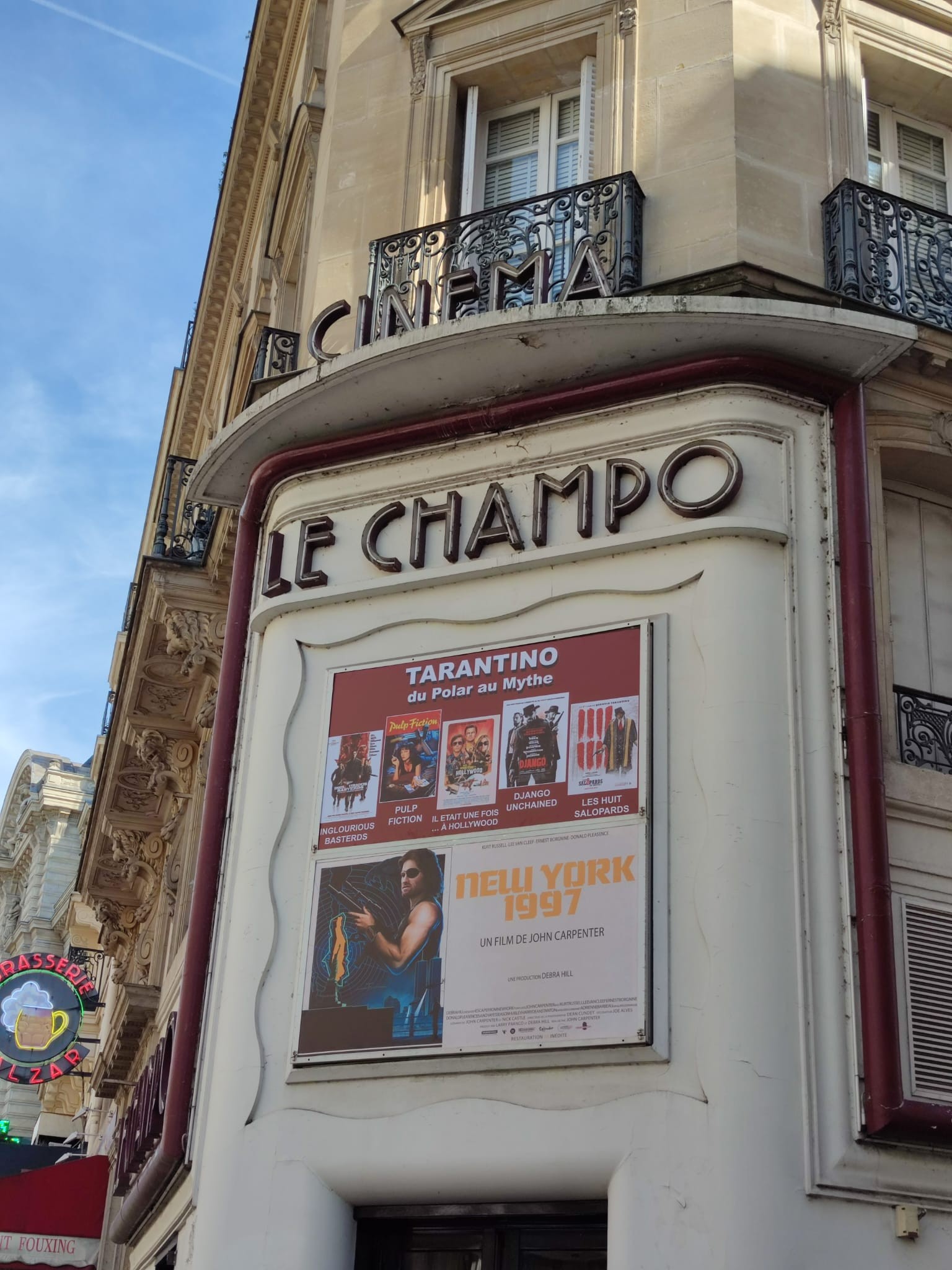
While large-scale Parisian cinema chains – such as MK2, Pathé-Gaumont, and UGC – shape their summer schedules around high-budget productions that, despite spanning various genres and narrative forms, are visually and narratively homogenized to ensure success that is as lucrative as it is fleeting, the nostalgic theaters of the Latin Quarter champion a different ethos. They make a manifesto of the return to image texture, experimentalism, and the intimate nature of auteur cinema, cementing their status as the preferred haunts of an audience with an undying love for film.
Renowned for preserving an independent, art-house sensibility, cinemas like Le Champo (pictured), La Filmothèque du Quartier Latin, Cinéma du Panthéon, and Reflet Médicis safeguard the charm of the French New Wave era, an ethos that still seems to inspire the generations of moviegoers who bring color to the streets of the 5th Arrondissement every day. Significantly, it is young people who are particularly drawn to the films currently showing. Whether through explorations of national cinemas – such as The Cranes Are Flying (Kalatozov, 1957), Close-Up (Kiarostami, 1991), and El espíritu de la colmena (Erice, 2004) – retrospectives on masters and icons of modern and contemporary film (Fritz Lang, Alfred Hitchcock, Vittorio De Sica, Nanni Moretti, Marilyn Monroe, Diane Keaton), or screenings of restored timeless masterpieces (Sunset Boulevard, Wilder, 1951; Love Streams, Cassavetes, 1984; Mulholland Drive, Lynch, 2001), these screenings offer an opportunity to rediscover, learn about, and share a passion for the big screen in a setting that celebrates its communal spirit.
From the intimate atmosphere of the cinema hall to the evocative power of the urban fabric – akin to a palimpsest where references and allusions to the seventh art have been rewritten and enacted for over a century – the drive to return to the roots of cinephilia simultaneously fosters participatory forms of spectatorship with an expanded scope. Mapping the neighborhoods, buildings, cafés, and public parks captured by the cameras of renowned directors serves as an example of film tourism, or ciné-balade, a neologism coined in 2011 by a local agency specializing in tours inspired by Paris’s most famous cinematic backdrops. Yet, it is also an embodied practice of revitalizing the work of art and negotiating one’s own relationship with the city, revealing an attempt to tap into continuity with the past in order to discover – within that past – essential tools for reorganizing and revitalizing the present.
«If you’re looking for the most picturesque and cinematic area of Paris, this is definitely it», a young man declares, speaking labored English to a group of visiting friends; and in the short stretch between Rue Champollion and Rue des Écoles – separating Le Champo from La Filmothèque du Quartier Latin – his words seem to describe a reality where the audiovisual experience remains synonymous with community, transformation, and possibility.


